
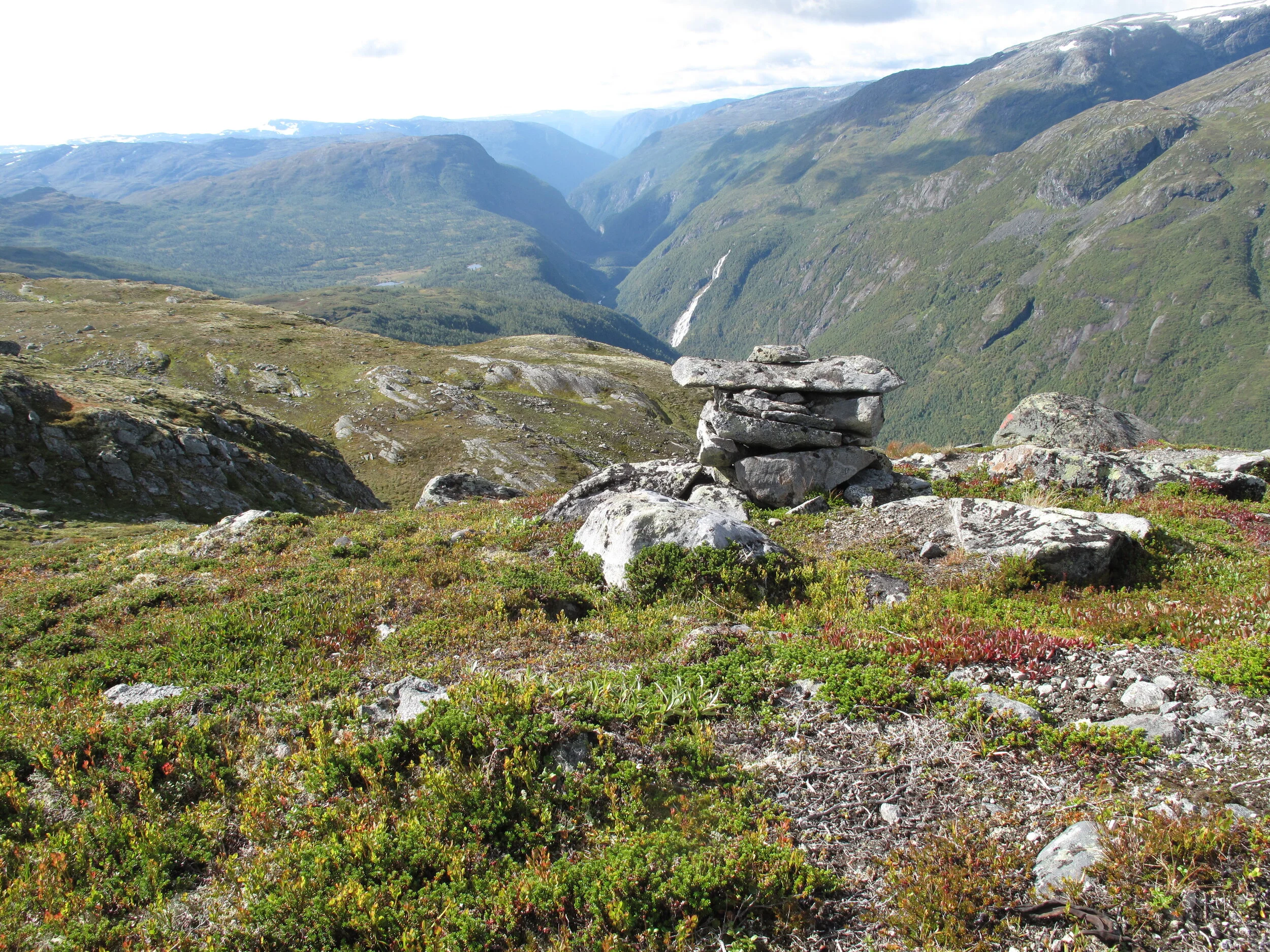
Jotunheimen
Årdal is the natural portal into Jotunheimen , with a short distance from the fjord to some of the most spectacular mountain areas in Norway.
Jotunheimen national park
Jotunheimen The national park has the highest mountains in Norway - with Galdhøpiggen as the highest peak. The national park is known as a popular base for traditional outdoor activities, hiking, mountaineering, hunting and fishing.
Jotunheimen The national park was established in 1980. It covered an area of 1151 km2 in Lom, Vågå and Vang in Oppland county, and Luster and Årdal in Sogn and Fjordane.
Jotunheimen covers everything from western nature, with high and sharp peaks in the Hurrungane as the most distinctive feature, to eastern nature with large valleys and mountain lakes. Utladalen is protected as a landscape conservation area together with Jotunheimen National Park. In this narrow and unique valley there are warm-loving deciduous forests and high waterfalls.
The name " Jotunheimen " - The birthplace of giants
It was the Norwegian poet Aasmund Olavsson Vinje who gave these mountains their name in 1862; Jøtunheimen - inspired by the wild landscape and Norse mythology. Jotun, means giant, and Jotunheimen therefore becomes the home of the giants. This is where the giants live. The Jøtunheimen was subsequently to the present day Jotunheimen , with the highest mountains in Norway. Mountaineering
Do you see yourself on one of the sharpest peaks? Mountaineering in Jotunheimen stands as strong now as when the English began exploring these mountains in the 19th century, and many still follow in the footsteps of Slingsby and the other pioneers.
Wildlife
Life in the high mountains is only for those who have cracked the code. It is not for everyone to survive long winters and strong winds. Here live animals and birds that cope with conditions that one would not think were possible to live in. Wildlife in Jotunheimen ranging from hardy small birds to predators with falconry eyes and sharp noses. They are all high-altitude specialists.
Wolverine
Agile and strong, the wolverine roams the mountains as a hunter and scavenger. It is a solitary animal with very large habitats. The wolverine benefits from the numerous presence of reindeer, with whom it also shares its habitat.
Reindeer
In Norway, we have an international responsibility to care for wild reindeer: About 90 percent of the world's wild tundra reindeer are found here. This high-altitude species is better adapted to low temperatures and barren pastures, and the herds are constantly migrating between grazing and calving areas throughout the year. Wild reindeer live in the West Jotunheimen , while the domesticated reindeer herders in Vågå and Lom operate large domesticated reindeer herds in the east of Jotunheimen
Mountain birds
When we are in the mountains, we both see and hear life in the air. The large birds of prey hunt small game, rodents and small birds. The second largest bird of prey in Norway, the golden eagle, can measure a full 2.2 meters between the tips of its wings. The hawk is the largest, which is common among birds of prey. The gyrfalcon also has a wide span between the tips of its wings: measuring up to 1.6 meters, this is our largest falcon. It is a fast hunter that usually strikes its prey in the air at high speed. Grouse is on the menu, and it therefore likes to nest in areas with a good population of grouse. Small birds can also become the gyrfalcon's prey. The birds are part of the soundscape in the mountains. The magical song of the heilo accompanies many mountain hikers, and if you hear the sound like two stones hitting each other, it is the stone splatter that is keeping an eye on you. With its blue and reddish-brown breast, the bluethroat is exotic to behold, and it is found in birch forests and willow thickets, even in the high mountains.
Swings in the mountains
The barren habitat in the mountains means that many species are vulnerable and completely dependent on good food supplies and undisturbed areas. This is the only way they can maintain their populations. Every year, the mountains are overrun with small and fierce lemmings. Large populations of small rodents provide good conditions and more food for predators and birds of prey. In such years, the grouse escape more easily and produce more young in the litter. This way, the grouse population can increase after good small rodent years, and also decrease after years with low small rodent numbers.
The landscape
Bedrock
The Caledonian mountain range stretches across Norway, from north to south. We know part of this mountain range as Jotunheimen . Jotunheimen Its mountains and peaks are resistant to erosion, which is ensured by the hard Jotun rocks gabbro and syenite. Other places in Jotunheimen We find looser and more nutritious rocks, which provide better soil for diverse vegetation.
Lakes
The queen of the mountain lakes is the emerald-green Gjende. The green color is due to the supply of glacial water. The glacial rivers carry mud with tiny clay particles down into the mountain lakes. The particles reflect the sunlight and give the water its distinctive green color. When the melting in the mountains is large, the color is at its most intense.
Botanical diversity
Issoleia grows the highest of all the flowering plants: All the way up to 2370 m above sea level. above Glittertinden! As soon as the snow has melted, the mogop and red herring also appear. Where there is good soil, several typical lowland species grow well above 1000 m above sea level. here in Jotunheimen , between the lilies of the valley. This poisonous plant was previously used in herbal medicine in the risky treatment of heart disease, colds and stomach aches. Along the north side of Gjende and below Besseggen, the chalky soil provides a botanical diversity in lush mountain birch forest. On steep slopes grows the white-clad mountain queen, also called bergfrue and locally called vianvang. This is Norway's national flower.
Low
Map lichen is a common species in Norway. Because map lichen does not survive under ice, we can calculate how long an area has been ice-free by looking at its size. Map lichen grows slowly: If an individual has a diameter of five centimeters, it means that it is about 250 years old. The lichen begins to grow as soon as ice and snow no longer cover the rock all year round. Light rocks without lichen have therefore been ice-free for a shorter time than rocks covered with lichen.
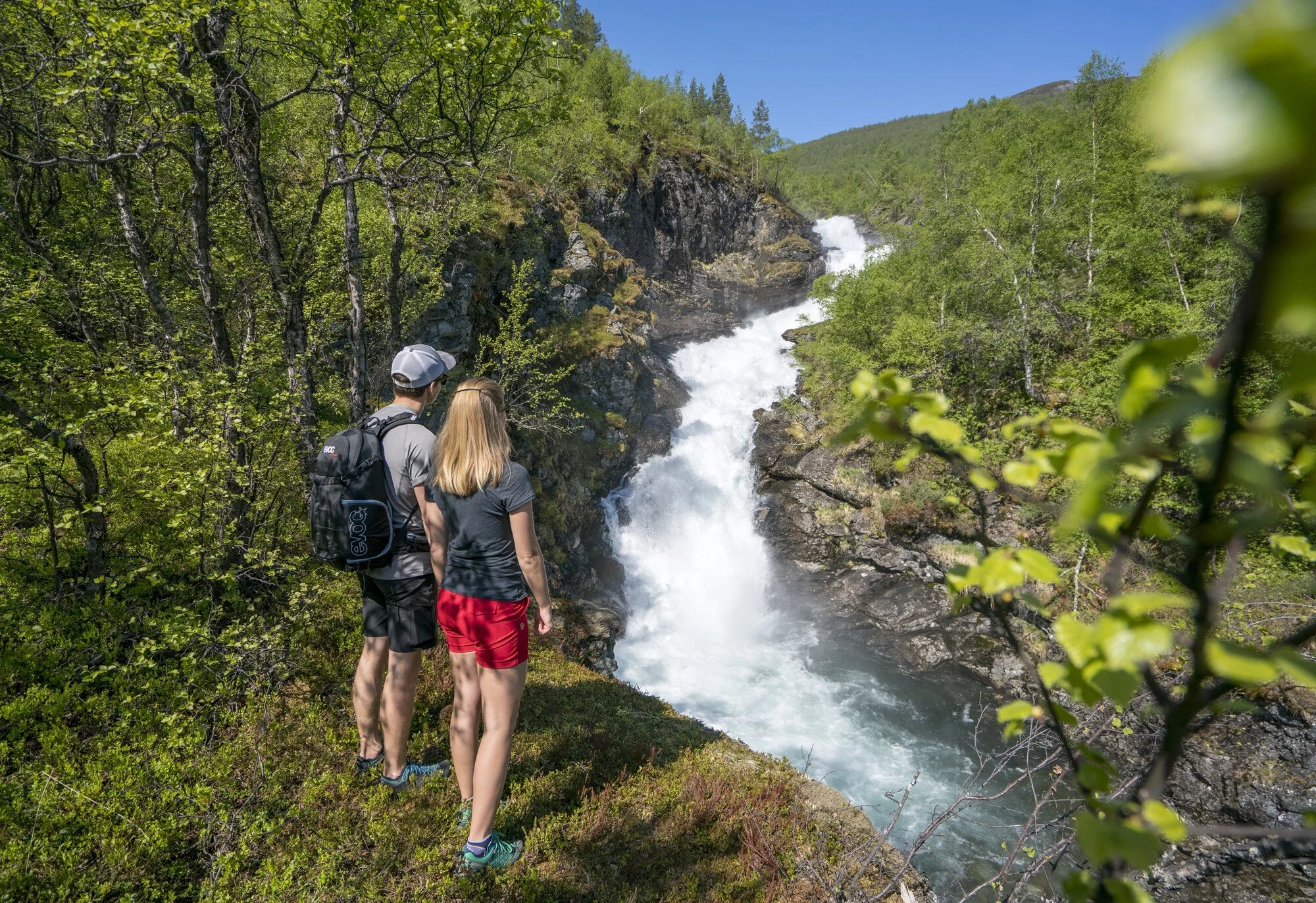
Experiences in Jotunheimen
IN Jotunheimen We have room for both the tinder angler and the flower lover. Both those with high mountains under their skin and first-time travelers to the mountains will find good experiences here. Do you lack knowledge of mountaineering on your own or do you want to be accompanied? Discover the mountains together with a mountain guide!
Cabin to cabin
The marked paths in Jotunheimen almost always rents you a tourist cabin. At most cabins you will get a hot meal on the table and a roof over your head for the night, unless you prefer to arrange it yourself at one of the unmanned cabins. If you have a tent in your backpack, you have all the possibilities in the world! Bring your fishing rod too, because trout can be lured into Jotunheimvatna. Buy a fishing license at inatur.no
Climate Park 2469
Experience mountains and climate on an exciting and educational tour through the climate park at Galdhøpiggen. The guided tour ends inside the ice tunnel: 60 meters inside the ice – 6000 years back in time. Book a tour at klimapark2469.no .
Besseggen
Besseggen is itself the icon of Norwegian mountain hiking. The hike is partly in airy and steep terrain and with clefts. Along the way you have views of Gjende and high mountains in Aust- Jotunheimen . This day trip requires that you are in good shape, and that you bring food and clothing for a day in the mountains. Book a ticket on the Gjende boat and embark on the most famous hike in Norway. See gjende.no.
Summit trip
Galdhøpiggen has risen higher than any other mountain in Norway. Follow a glacier guide from Juvasshytta or walk on your own from Spiterstulen. In Jotunheimen you will find most of the 2,000-meter stops in Norway. The view from one peak awakens the desire to visit the next, and so begins the peak ringing. Follow the Høgruta i Jotunheimen – five days of skiing over seven 2000-meter peaks, with long uphills and steep descents.
Glacier hiking
The adventure ice in Svellnosbreen is a world of ice and exciting landscapes, a playground for the adventurous with a thirst for adventure, crampons and ice axes. Traveling on snow glaciers and blue ice requires knowledge and experience with glaciers and equipment - or the company of an experienced glacier guide.
Utladalen
On Utladalen nature house gives you an insight into the nature and culture of the valley and the West Jotunheimen . Here, at the entrance to Utladalen , you can also enjoy a coffee and waffle. Take the child-friendly walk along Folkevegen to Vetti gard Great for a stroll, with a stroller or bike!
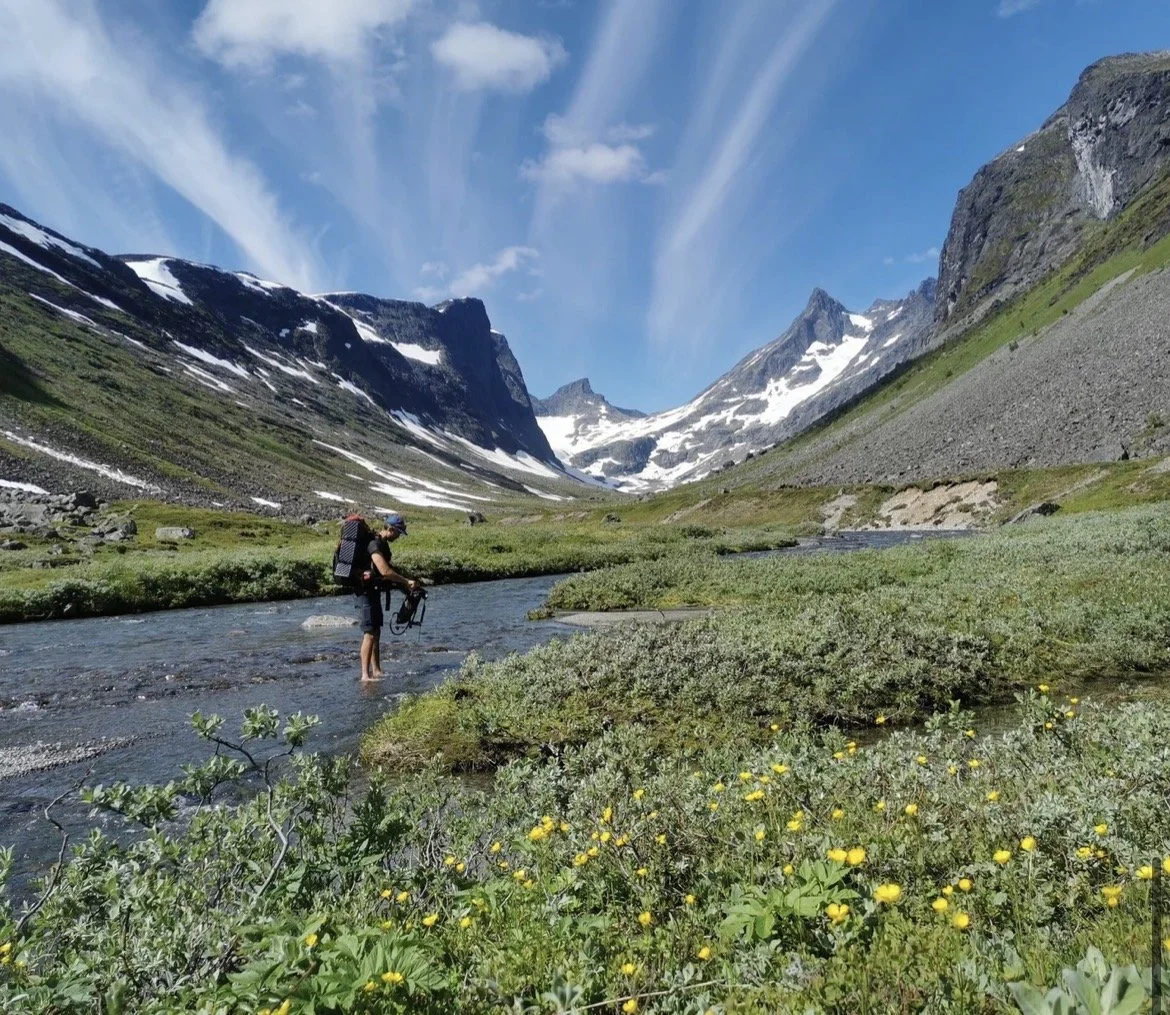
Take care of our nature!
Welcome to the national park! There is room for many here if we take into account the people and animals around us. The national parks are the best of Norwegian nature. The protection contributes to the good care of the landscape and the diversity of animals and plants. This way we can continue to collect good travel memories in the future.
Public right
You can go wherever you want on foot or on skis. Feel free to follow marked paths or marked trails in the national park. You can take your break anywhere. Pitch your tent wherever you want as long as you are more than 150 meters from a house or cabin where people live. In the national park you can pick berries, mushrooms and common plants for your own use. Consideration for vegetation and wildlife is important, especially during the nesting and breeding season. Cultural heritage such as burial mounds and hunting pits are protected, so leave stones from old walls.
Garbage
Remember to clean up after yourself and take your trash home with you.
Bonfire
It is allowed to light fires between September 15th and April 15th and the rest of the year in places where it is clearly not likely to cause a fire. Please follow local restrictions. Be considerate of nature when collecting firewood.
Hunting and fishing
In the national park you can hunt and fish as in a mountain area, provided you have a hunting/fishing license. It is not allowed to use live fish as bait. You are also not allowed to take live fish or wet fishing equipment from one watercourse to another.
Dog in the national park
Dogs are welcome on the tour. Between April 1 and October 1/November 1, all dogs must be kept on a leash. Be considerate of game, grazing animals and people all year round. Reindeer are especially vulnerable in winter and spring.
Motor traffic
Motorized vehicles are generally prohibited in the national park. All inquiries regarding drone use and other motorized traffic in the national park must be directed to the Jotunheimen National Park Board.
Filming with a drone
It is not permitted to use drones within the national park boundaries. Outside these areas, there are strict rules and guidelines for using drones for play and hobbies:
1: You must always be able to see the drone. The maximum flight altitude is 120 meters above the ground. Fly in a considerate manner.
2: Keep a distance of 150 meters from people , buildings and traffic. Applies to traffic on roads, at sea and in the air.
3: Avoid flying over festivals, military areas or sporting events.
4: Be considerate of others' privacy. Remember the rules for approval before using photos and videos of other people.
Clothing and equipment
The weather in the mountains can change rapidly in both summer and winter. Summer can offer warm, blue skies or low temperatures and thick fog. Winter hikes can give you sunshine and long visibility or cold winds and dense snowdrifts. You must assess the weather and conditions, your fitness and skills, and prepare yourself with the right clothing and equipment.
Hiking in the mountains can be demanding. Hiking with a mountain guide provides safety and useful tips. Good planning makes for a good hiking experience!
Source: miljodirektoratet.no and the Norwegian Aviation Authority.
Hiking tip: Soleiebotntind (2083 m above sea level)

Start : Tverrelvi by Tindevegen
Time : about 6 hours round trip
Km : 8
Altitude : 1240-2083 m.
Season : June - September
From Upper Årdal are you driving Tindevegen against Turtagrø and stops at Tverrelvi. There is room for a few cars on an exit. The hike to the top of Store Soleiebotntind does not require climbing. Follow the path on the right side of the river. The path starts at a moderate incline and then gets steeper and steeper. Remember to keep right as you work your way up towards the top and the steeper parts of the route. Return the same way.